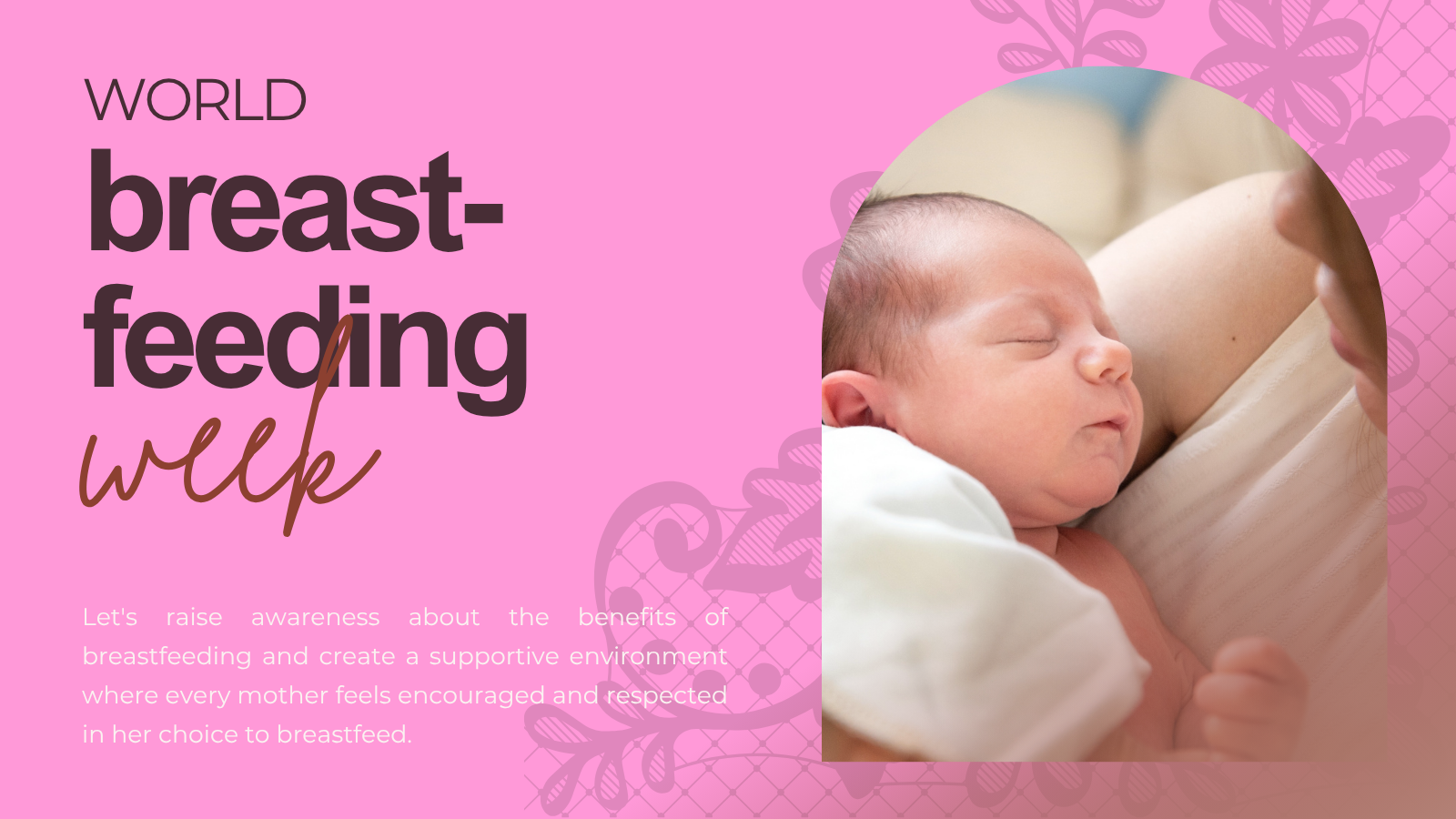
Small support, lasting health
World Breastfeeding Week runs August 1–7, and it's a reminder that a newborn's health is tied directly to the support their mother receives.
Started in 1992 by the World Alliance for Breastfeeding Action, World Breastfeeding Week now spans more than 120 countries and brings together hospitals, community health workers, and families around one shared goal: helping more mothers breastfeed successfully, for as long as they choose to.
This year's observance arrives at a time when more parents than ever are asking questions online before they ask a doctor. That shift makes accurate, judgment-free information more important than ever, and it is exactly the gap MedizinHub aims to close.
Why breastfeeding matters
Breast milk is often described as a living fluid, and for good reason. Its composition changes from the first days after birth through the following months, adjusting to the baby's exact stage of development. In the earliest days, colostrum delivers a concentrated dose of antibodies that helps a newborn's immune system get started. As feeding continues, breast milk keeps supplying enzymes, hormones, and immune cells that formula cannot fully replicate.
The benefits extend well beyond infancy. Breastfed babies tend to have lower rates of ear infections, respiratory illness, and gastrointestinal issues in their first year, and the World Health Organization's feeding guidance points to early, exclusive breastfeeding as one of the most effective ways to prevent leading causes of child death. Some research also links breastfeeding to a reduced risk of childhood obesity and type 2 diabetes later in life. For mothers, nursing triggers the release of oxytocin, which helps the uterus contract and recover after delivery, and it is associated with a lower long-term risk of breast and ovarian cancer, as well as type 2 diabetes.
There is also a quieter, less discussed benefit: the physical closeness of feeding supports early bonding and can ease the emotional adjustment of the postpartum period, both of which play a role in a mother's overall recovery, not just the baby's growth.
The part nobody talks about enough
Despite these benefits, breastfeeding is rarely as effortless as it looks in parenting brochures. Many new mothers experience real, physical difficulty in the first weeks: cracked or painful nipples, engorgement, mastitis, or a baby who simply will not latch correctly no matter how many positions are tried. Others notice their milk supply seems too low, or fluctuates unpredictably from one day to the next.
These struggles are common, but they are also frequently dismissed as something to simply push through. That advice can do more harm than good. Persistent nipple pain, for instance, is often a sign of an underlying latch or tongue-tie issue rather than something that will resolve on its own. Low supply can sometimes be traced back to retained placental tissue, thyroid imbalances, or hormonal shifts following delivery, all of which are medical, not just behavioral, issues.
A correct latch should not hurt. Persistent pain is a signal worth investigating, not a burden to endure quietly.
This is exactly where postpartum hormonal changes deserve closer attention. The dramatic drop in estrogen and progesterone after birth, combined with fluctuating prolactin levels, can affect everything from mood to milk production to the physical healing process. When feeding difficulties overlap with these hormonal shifts, it becomes harder for a mother to tell whether what she is experiencing is normal adjustment or something that needs medical attention.
Common myths worth retiring
A few misconceptions still circulate widely enough to cause real harm. One is the idea that small breasts cannot produce enough milk, which has no basis in physiology, since supply depends on glandular tissue and demand, not overall size. Another is that a mother should stop breastfeeding the moment she feels unwell, when in most common illnesses, continuing to nurse is safe and can even pass helpful antibodies to the baby. A third myth suggests that pain during feeding is simply part of the process, when in reality it rarely has to be.
When to seek professional support
A good rule of thumb: if breastfeeding is causing ongoing pain, if your baby is not gaining weight as expected, or if you notice signs like fever, breast redness, or unusual discharge, it is time to get an expert opinion rather than wait it out.
- Pain that doesn't ease after the first week of adjusting latch
- Supply that drops suddenly rather than gradually
- Fever, redness, or a hard, hot area on the breast
- Signs of hormonal imbalance: fatigue, hair loss, mood shifts
A lactation consultant can help correct latch and positioning issues, but when the root cause looks hormonal or physical rather than mechanical, a gynecologist consultation is often the more appropriate next step. A gynecologist can assess postpartum hormonal balance, check for retained tissue or infection, and rule out thyroid or pituitary issues that are known to interfere with milk supply. Getting this evaluated early can mean the difference between weeks of frustration and a quick, manageable fix.
It is worth saying plainly: seeking this kind of care is not a sign that something has gone wrong with you as a parent. It is simply good medicine. Just as you would see a doctor for a persistent cough instead of assuming it will pass, feeding difficulties that do not improve within a week or two deserve the same attention.
What a first visit typically covers
Parents are sometimes unsure what to expect from this kind of appointment, which can make them put it off longer than necessary. In most cases, the visit starts with a conversation about feeding history, delivery details, and any symptoms, followed by a physical exam to check healing, breast tissue, and signs of infection. Bloodwork may be ordered if a hormonal or thyroid cause is suspected. None of this requires stopping breastfeeding beforehand, and most issues identified at this stage are straightforward to treat once named.
If getting to a clinic in the middle of newborn care feels impossible, an online consultation is often enough for a first assessment, with an in-person visit reserved for anything that needs a physical exam. For mothers in Tamil Nadu, MedizinHub's gynecologist consultation in Chennai covers both postpartum feeding concerns and routine pregnancy checkups, so the same doctor can follow you from pregnancy through the fourth trimester.
Supporting mothers beyond the first week
World Breastfeeding Week is also a moment to recognize that support does not end once a mother leaves the hospital. Partners, family members, and workplaces all play a role in whether breastfeeding is sustainable long term. Practical support, such as help with household tasks, protected time to rest, and flexible return-to-work policies, has been shown to extend breastfeeding duration far more effectively than advice alone.
Healthcare systems have a role to play too. Easy access to lactation consultants, postpartum checkups that specifically ask about feeding challenges, and clear referral pathways to specialists all make a measurable difference in outcomes. MedizinHub believes that this kind of coordinated, judgment-free support is what actually moves the needle: not one-off advice, but a system that catches problems early and treats them without delay.
Closing that gap is less about convincing parents that breastfeeding matters, most already know that, and more about making sure help is easy to reach the moment something feels wrong.
A simple takeaway
This World Breastfeeding Week, the message we want every parent to hear is this: breastfeeding is natural, but that does not mean it is always easy, and needing help with it is entirely normal. If something feels off, whether it is pain, low supply, or symptoms that do not add up, do not wait for it to resolve on its own. Book a gynecologist consultation, ask questions, and get the support that lets you and your baby thrive together.
A well-supported mother raises a well-nourished child, and that support starts with taking her concerns seriously from day one.