What to Eat During H1N1 Recovery: Foods, Nutrients and a Simple Diet Plan
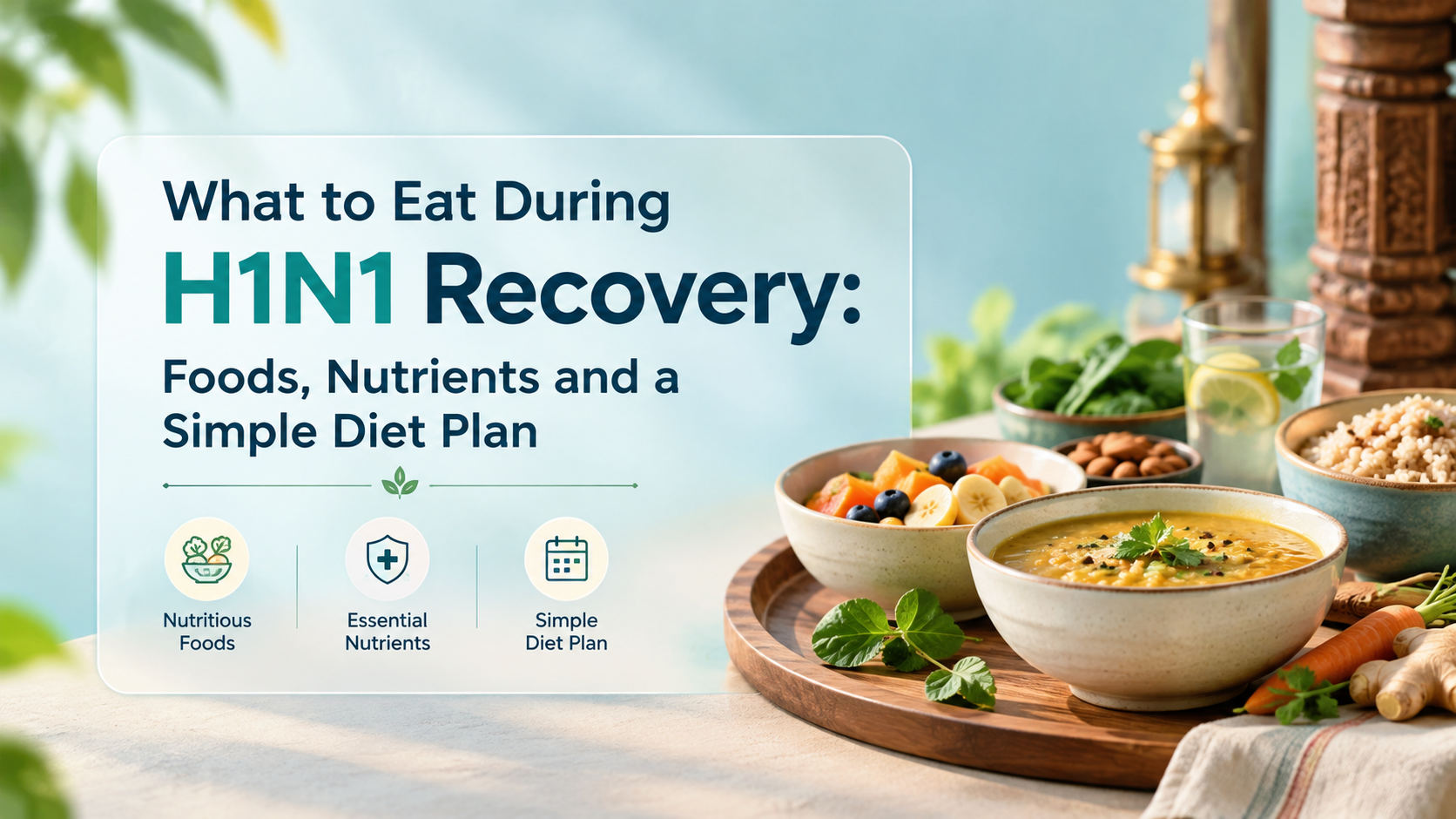
H1N1 influenza can cause fever, tiredness, body aches, cough, sore throat and reduced appetite. During recovery, the body needs enough fluids, calories, protein, vitamins and minerals to support normal immune function and recovery.
There is no specific food that cures H1N1. However, eating a balanced diet and staying adequately hydrated can help you maintain your nutritional intake while your body recovers.
For most people, a practical H1N1 recovery diet includes water and other suitable fluids, protein-rich foods, fruits and vegetables, and easily digestible carbohydrates.
If you have been diagnosed with H1N1, food should complement—not replace—medical care and any treatment prescribed by your doctor.
Quick Answer: What Should You Eat During H1N1 Recovery?
During H1N1 recovery, choose foods that are nutritious, easy to tolerate and suitable for your symptoms.
Good options include:
-
Fluids: water, soups, rice water, coconut water and ORS when medically appropriate
-
Protein: eggs, dal, lentils, curd, paneer, fish and chicken
-
Fruits: guava, oranges, papaya, banana and other fruits you tolerate
-
Vegetables: cooked leafy vegetables, carrots, pumpkin and beans
-
Carbohydrates: rice, idli, dosa, pongal, oats and khichdi
-
Comfort foods: warm soups and soft, lightly prepared meals
If your appetite is poor, eating small meals several times a day may be easier than trying to eat large meals.
Why Nutrition Matters During H1N1 Recovery
Influenza can reduce your appetite while fever, sweating, vomiting or diarrhoea can increase fluid losses in some people.
This makes three things particularly important:
-
Hydration
-
Adequate energy intake
-
Sufficient protein and micronutrients
The goal is not to follow a restrictive diet. Instead, focus on foods that provide nutrition without being difficult to eat or digest.
1. Stay Hydrated
What should you drink during H1N1?
Drink fluids regularly throughout the day, particularly if you have fever or are sweating more than usual.
Suitable options may include:
-
Water
-
Clear soups
-
Rice water or kanji
-
Coconut water
-
Buttermilk
-
Oral rehydration solution (ORS), when appropriate
-
Other suitable non-alcoholic fluids
If you have vomiting or diarrhoea, maintaining fluid and electrolyte balance becomes particularly important. Ask a healthcare professional which rehydration option is appropriate for you.
Signs of possible dehydration
Pay attention to symptoms such as:
-
Very dark urine
-
Passing urine less frequently
-
Dry mouth
-
Excessive thirst
-
Dizziness or weakness
Severe dehydration may require medical attention.
2. Eat Enough Protein
Protein is an important part of a recovery diet.
Protein provides amino acids that the body uses for maintaining and repairing tissues and supporting normal physiological functions.
Good protein choices include:
-
Eggs
-
Dal
-
Lentils
-
Chickpeas
-
Beans
-
Curd or yogurt
-
Paneer
-
Milk, if tolerated
-
Fish
-
Chicken
-
Tofu and soy foods
For easier digestion, choose preparations such as boiled eggs, lightly cooked dal, grilled or lightly cooked fish and chicken rather than heavily fried foods.
3. Include Fruits and Vegetables
Fruits and vegetables provide vitamins, minerals, fibre and other beneficial plant compounds.
Useful choices include:
Fruits
-
Guava
-
Orange
-
Sweet lime
-
Papaya
-
Banana
-
Apple
-
Pomegranate
Vegetables
-
Carrot
-
Pumpkin
-
Beans
-
Spinach and other leafy vegetables
-
Tomato
-
Capsicum
If you have a sore throat, choose soft fruits and well-cooked vegetables that are comfortable to swallow.
4. Foods That Provide Vitamin C
Vitamin C contributes to normal immune function.
Food sources include:
-
Guava
-
Amla
-
Oranges
-
Sweet lime
-
Papaya
-
Tomatoes
-
Capsicum
A varied diet can provide vitamin C. Taking very high doses of vitamin C is not a substitute for medical treatment.
5. Include Zinc-Rich Foods
Zinc is another nutrient involved in normal immune function.
Food sources include:
-
Eggs
-
Fish
-
Meat
-
Dairy products
-
Chickpeas
-
Lentils
-
Nuts
-
Seeds
-
Whole grains
If you are considering a zinc supplement, discuss it with a healthcare professional rather than taking high doses on your own.
6. Choose Easily Digestible Energy Foods
When you have influenza, you may not feel like eating heavy meals. Soft and familiar foods can make it easier to maintain your energy intake.
Consider:
-
Idli
-
Pongal
-
Upma
-
Oats
-
Rice
-
Khichdi
-
Soft chapati
-
Boiled potato
-
Banana
-
Lightly prepared dosa
You can make these meals more nutritious by combining them with protein and vegetables.
For example:
Idli + sambar provides a combination of carbohydrates and protein.
Rice + dal + cooked vegetables provides energy, protein and vegetables in one meal.
7. Are Soups Good During H1N1 Recovery?
Warm soup can be an easy way to consume fluids and food when your appetite is reduced.
Options include:
-
Vegetable soup
-
Chicken soup
-
Dal soup
-
Mixed vegetable soup
Keep soups moderately seasoned and avoid excessive salt, oil and chilli if your throat or stomach is irritated.
What Foods Should You Avoid During H1N1?
There is no universal list of foods that every person with H1N1 must avoid.
However, some foods may be less comfortable during illness.
Consider limiting:
-
Deep-fried foods
-
Very spicy foods if they irritate your throat or stomach
-
Highly processed foods
-
Excessively sugary drinks
-
Alcohol
-
Excessive caffeine
The main goal is to choose foods that you can comfortably tolerate while maintaining adequate nutrition and hydration.
What Should You Eat If You Have No Appetite?
Loss of appetite can make it difficult to eat enough during influenza.
Instead of forcing yourself to eat three large meals, try small meals or snacks every few hours.
For example:
Morning: Idli or oats
↓
Mid-morning: Banana or papaya
↓
Lunch: Rice + dal + vegetables
↓
Evening: Soup
↓
Dinner: Khichdi or soft rice + protein
Choose foods you can tolerate and continue drinking suitable fluids.
If you are unable to eat or drink adequately, contact a healthcare professional.
Sample One-Day H1N1 Recovery Meal Plan
The following is a general example, not an individualized medical diet.
| Time | Example |
|---|---|
| Early morning | Water or another suitable fluid |
| Breakfast | 2–3 idlis + mild sambar |
| Mid-morning | Banana, papaya or guava |
| Lunch | Rice + dal + cooked vegetables + curd |
| Evening | Vegetable or chicken soup |
| Snack | Light snack or fruit |
| Dinner | Vegetable khichdi + dal or another protein source |
| Before bed | Water or warm milk if tolerated |
Your actual dietary needs can vary depending on age, body size, appetite, activity level and existing medical conditions.
Can Food Cure H1N1?
No. Food does not cure H1N1 influenza.
A nutritious diet can help you maintain energy and nutrient intake during recovery, but it should not be considered a treatment for influenza.
If a doctor has prescribed medication, take it according to their instructions.
Do not stop, change or start prescription medicines without medical advice.
Can Vitamin C or Zinc Cure H1N1?
No.
Vitamin C and zinc are essential nutrients involved in normal body functions, including immune function. However, consuming large amounts of these nutrients does not mean that H1N1 will be cured.
Food should provide the foundation of your diet. Supplements may be appropriate in certain circumstances, but high-dose supplementation should be discussed with a healthcare professional.
How Many Meals Should You Eat During Recovery?
There is no fixed number of meals required for everyone.
If you have a normal appetite, you may continue your usual meal pattern.
If your appetite is low, try:
5–6 small meals or snacks instead of 3 large meals.
The priority is to maintain adequate fluid and food intake without making meals difficult to tolerate.
When Should You See a Doctor?
Most people with influenza recover without serious complications, but some people are at higher risk of becoming seriously ill.
Seek prompt medical attention if symptoms are severe, worsening or concerning.
Get urgent medical help if you experience:
-
Difficulty breathing or shortness of breath
-
Chest pain or pressure
-
Confusion
-
Severe dizziness
-
Unusual difficulty staying awake
-
Severe dehydration
-
Inability to keep fluids down
-
Symptoms that improve and then become significantly worse
Children can have different warning signs. Parents and caregivers should seek medical advice if a child develops breathing difficulty, significant dehydration, unusual sleepiness or other concerning symptoms.
H1N1 Recovery Diet: Key Takeaways
If you are recovering from H1N1 influenza:
1. Hydrate regularly.
Water, soups and other appropriate fluids can help maintain hydration.
2. Include protein.
Eggs, dal, lentils, dairy, fish, chicken and other protein sources can help meet nutritional needs.
3. Eat fruits and vegetables.
Choose a variety of foods that you can comfortably tolerate.
4. Choose easy-to-eat foods.
Idli, pongal, oats, rice, khichdi and soups can be practical choices when appetite is low.
5. Eat smaller meals if necessary.
You do not have to force yourself to eat large meals.
6. Avoid relying on supplements or special foods as a cure.
No particular food cures H1N1.
7. Follow medical advice.
Nutrition supports recovery but does not replace appropriate medical care.
Frequently Asked Questions About Food and H1N1
What is the best food to eat during H1N1?
There is no single “best” food for H1N1. A balanced combination of fluids, protein-rich foods, fruits, vegetables and easily digestible carbohydrates is a practical approach.
Can I eat eggs when I have H1N1?
Yes. Eggs can be included in an H1N1 recovery diet if you tolerate them. They are a convenient source of protein.
Can I eat chicken during H1N1?
Yes. Chicken can be included as a protein source. Lightly cooked chicken or chicken soup may be easier to tolerate than fried or heavily spiced preparations.
Is chicken soup good for H1N1?
Chicken soup can provide fluids and some nutrients and may be comforting when you have a poor appetite. It should not, however, be considered a cure for H1N1.
Can I drink coconut water during H1N1?
Coconut water can contribute to fluid intake. However, it should not automatically replace medical rehydration solutions when ORS is specifically recommended.
Should I drink more water when I have H1N1?
Maintaining adequate hydration is important, particularly if you have fever, sweating, vomiting or diarrhoea. Drink regularly according to your thirst and medical advice.
Can vitamin C cure H1N1?
No. Vitamin C is important for normal immune function, but it does not replace appropriate treatment for influenza.
What can I eat when I have no appetite?
Try small portions of foods such as idli, pongal, khichdi, soup, banana, curd, oats or other foods you can comfortably tolerate.
Can children follow the same H1N1 diet?
Children have different nutritional and fluid requirements depending on their age and health. Do not simply apply an adult meal plan to a child. Seek pediatric medical advice when a child has influenza, particularly if symptoms are severe or fluid intake is poor.
Medical Disclaimer
This article provides general health information for educational purposes. It is not a substitute for professional medical diagnosis, treatment or individualized dietary advice.
If you have suspected or confirmed H1N1 influenza, follow the advice of your doctor. People at higher risk of influenza complications may require closer medical assessment.
If symptoms are severe, rapidly worsening or associated with breathing difficulty, chest pain, confusion, severe dehydration or other emergency warning signs, seek urgent medical care.
About the Author
MedizinHub Team
Posted in September 25, 2026