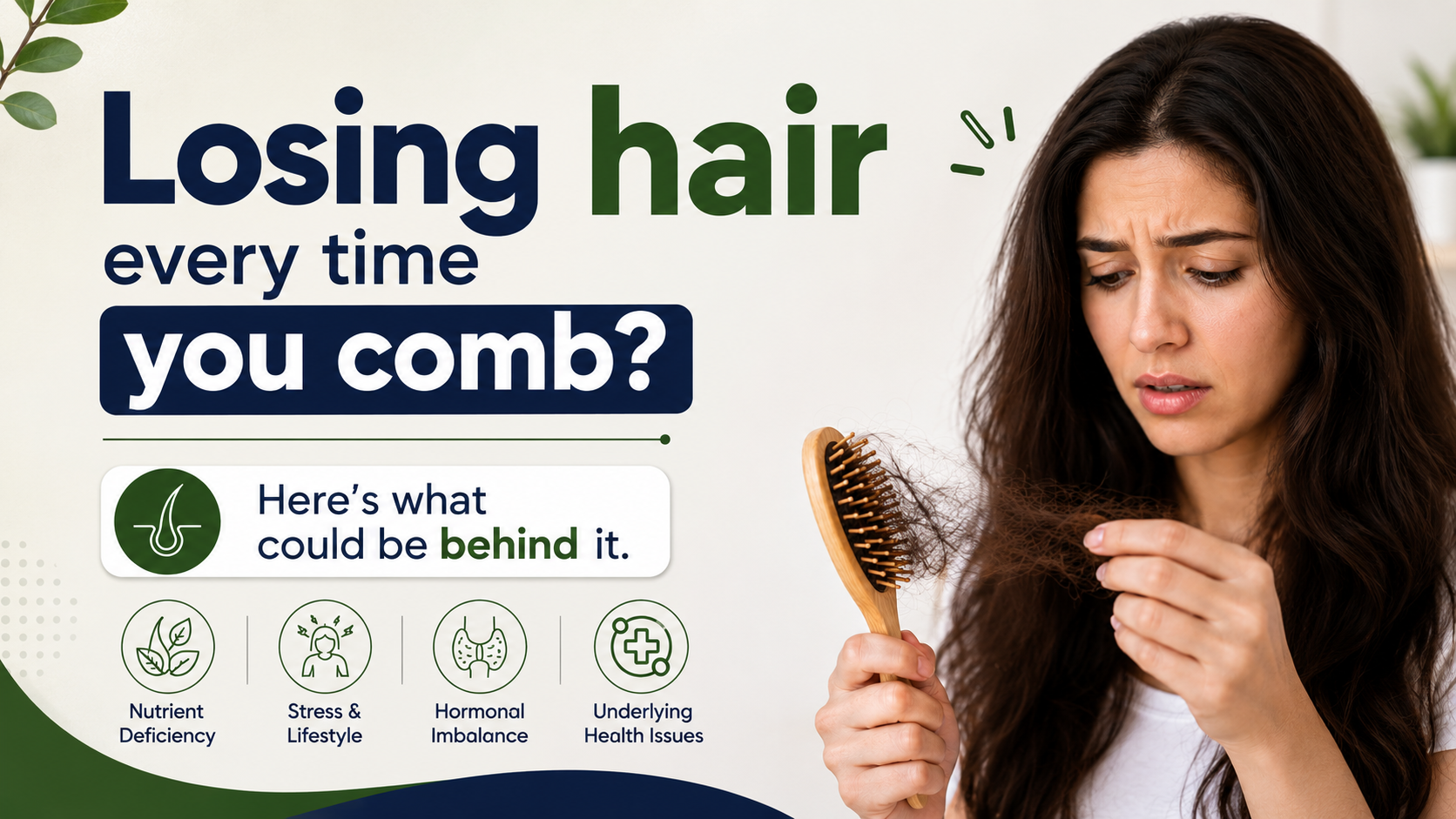
⚕ Hair health · Explained
Hair loss is one of the most common health concerns globally — yet most people never find out the real cause. This guide breaks down the science, the triggers, and what to do next.
Shedding 50 to 100 hairs per day is a normal part of the hair growth cycle. But when numbers climb — or when regrowth slows — it signals that something in the body has changed. The important thing: most causes are identifiable, and most are treatable.
“Hair doesn’t fall without reason. Every strand reflects what’s happening inside — nutrition, hormones, stress, or genetics.”
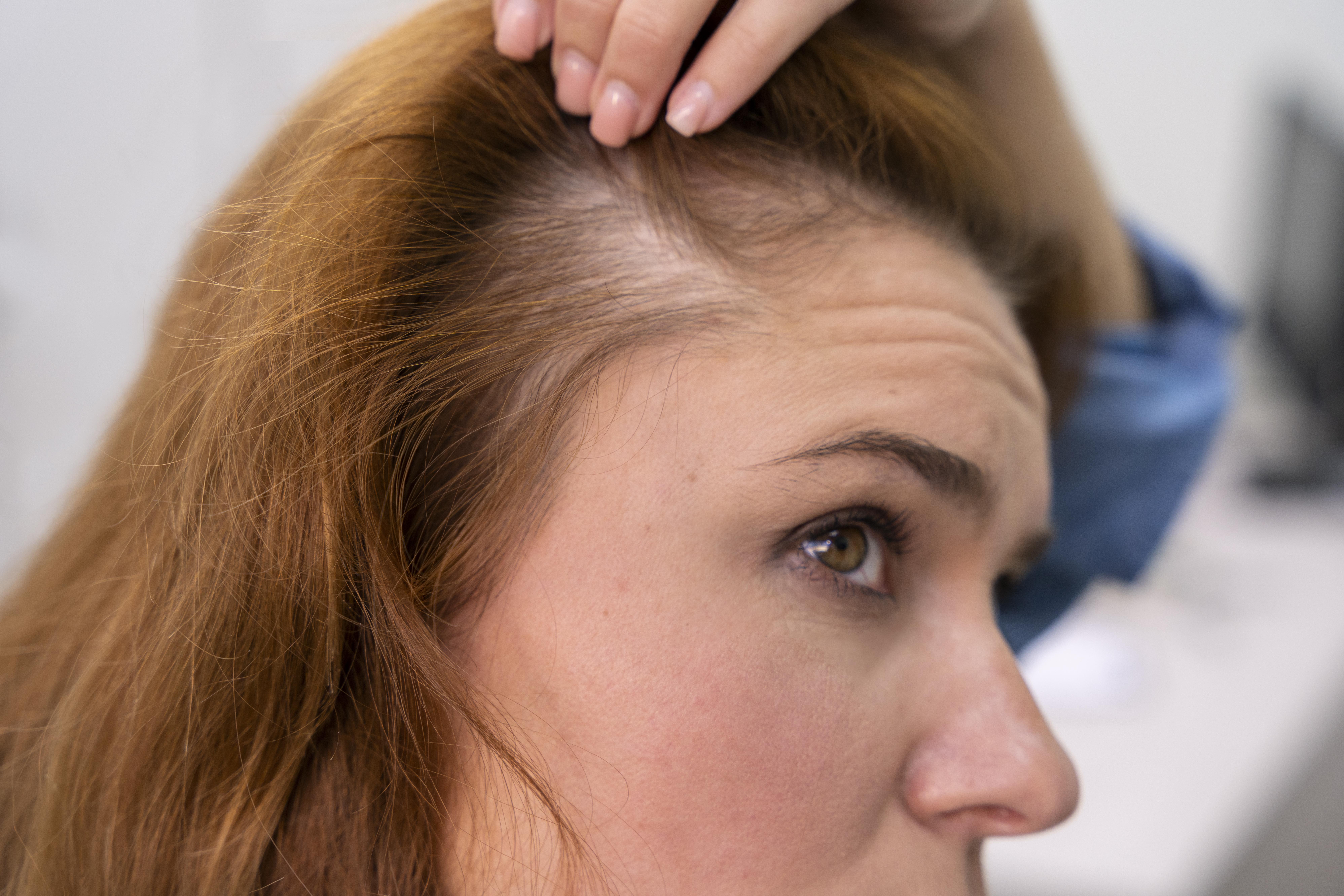
The 7 most common reasons for hair loss
Each cause has a distinct pattern and a specific fix. Tap any card to learn more.
1
Androgenetic alopecia (genetic hair loss)
Inherited sensitivity to DHT — the most common cause
DHT binds to genetically sensitive follicles and progressively miniaturises them. In men this produces a receding hairline or crown thinning. In women it causes diffuse thinning along the parting. Family history on either side can be a predictor.
???? Minoxidil (topical) and finasteride (oral, for men) have the strongest clinical evidence. Starting early yields significantly better outcomes.
2
Telogen effluvium (stress or shock-induced)
Large-scale shedding 2–3 months after a major trigger
Under physical or emotional stress — surgery, illness, childbirth, or prolonged strain — a large proportion of follicles shift into the resting (telogen) phase simultaneously. Two to three months later they shed at once, which is why the timing rarely matches the trigger.
???? Once the trigger resolves, hair usually regrows without treatment. Managing stress and nutritional adequacy speed recovery.
3
Nutritional deficiencies
Iron, vitamin D, zinc, and protein top the list
Hair follicles are among the most metabolically active structures in the body. Iron deficiency — particularly low ferritin — is one of the most frequently missed causes in women. Vitamin D, zinc, and dietary protein are also essential for normal follicle cycling.
???? A blood panel covering ferritin, vitamin D, zinc, and TSH is the best starting point. Targeted supplementation under medical guidance often shows improvement within 3–4 months.
4
Thyroid dysfunction
Both underactive and overactive thyroid affect hair growth
The thyroid regulates metabolic rate, and hair follicles are highly sensitive to these hormonal signals. Both hypothyroidism and hyperthyroidism disrupt the normal growth cycle, producing diffuse thinning often accompanied by fatigue, weight changes, or temperature sensitivity.
???? A TSH blood test confirms thyroid status. With appropriate medication, hair loss from thyroid imbalance is usually fully reversible.
4
Alopecia areata (autoimmune)
The immune system attacks hair follicles
The immune system incorrectly identifies follicles as foreign tissue, producing smooth, circular patches of sudden hair loss. It can affect the scalp, eyebrows, or eyelashes. Crucially, follicles remain alive and intact — regrowth is biologically possible.
???? Corticosteroid injections, topical immunotherapy, and JAK inhibitors (FDA-approved since 2022) show strong efficacy in moderate to severe cases.
5
Medication side effects
Several common drugs cause temporary hair shedding
Blood thinners, certain antidepressants, beta-blockers, retinoids, and some hormonal contraceptives can all trigger diffuse shedding. Chemotherapy targets rapidly dividing cells including follicles. This loss is almost always reversible after stopping or switching the medication.
???? Never discontinue prescribed medication without consulting your doctor. Raising the issue allows exploration of alternatives.
6
Traction and heat damage
Physical stress on the follicle causes preventable loss
Repeated tension from tight hairstyles causes traction alopecia — slow progressive damage to follicles at the hairline and temples. Heat styling above 230°C damages the hair shaft. Both are preventable and largely reversible if identified before scarring occurs.
???? Looser styles, reduced heat, and thermal protectant allow follicles to recover. In early stages, no medication is needed.

What actually works
Effective treatment begins with identifying the root cause — not with buying products. These are the evidence-backed starting points.
Blood panel first
Test ferritin, TSH, vitamin D, and zinc before any treatment. Guessing costs months.
Minoxidil (topical)
FDA-approved for men and women. Apply consistently for at least 4 months to assess response.
Scalp massage
Daily 4-minute massage increases follicle blood flow and has been shown to improve thickness over 24 weeks.
Protein and iron intake
Aim for at least 50g of dietary protein daily. Iron-rich foods support the oxygen supply follicles need.
Sleep quality
Growth hormone peaks during deep sleep. Chronic poor sleep disrupts the hair growth cycle directly.
See a specialist
A trichoscopy or scalp biopsy identifies the exact diagnosis and prevents months of misguided treatment.
Visible improvement takes time. Most treatments show measurable results at 3 to 6 months. Consistency and correct diagnosis are what matter most.
Common misconceptions, corrected
Myth
Washing hair daily causes it to fall out faster.
Fact
Washing only removes hairs already detached from the follicle — it does not trigger loss in healthy ones.
Myth
Hair loss only becomes significant after age 50.
Fact
Androgenetic alopecia can begin in the early 20s, and telogen effluvium has no age threshold.
Myth
Cutting hair short makes it grow back thicker.
Fact
Thickness is determined at the follicle. Trimming the shaft has no effect on the root or growth rate.
Myth
Wearing a hat every day accelerates baldness.
Fact
Hats do not restrict scalp blood flow in any clinically meaningful way and do not cause hair loss.
*
When home remedies aren’t enough
Shedding beyond 3 months, patchy loss, or hair loss alongside fatigue or weight changes should be evaluated clinically. Early diagnosis consistently leads to better outcomes.
→ Book a consultation on MedizinHub