Heat vs ice: which actually helps neck pain?
The short answer
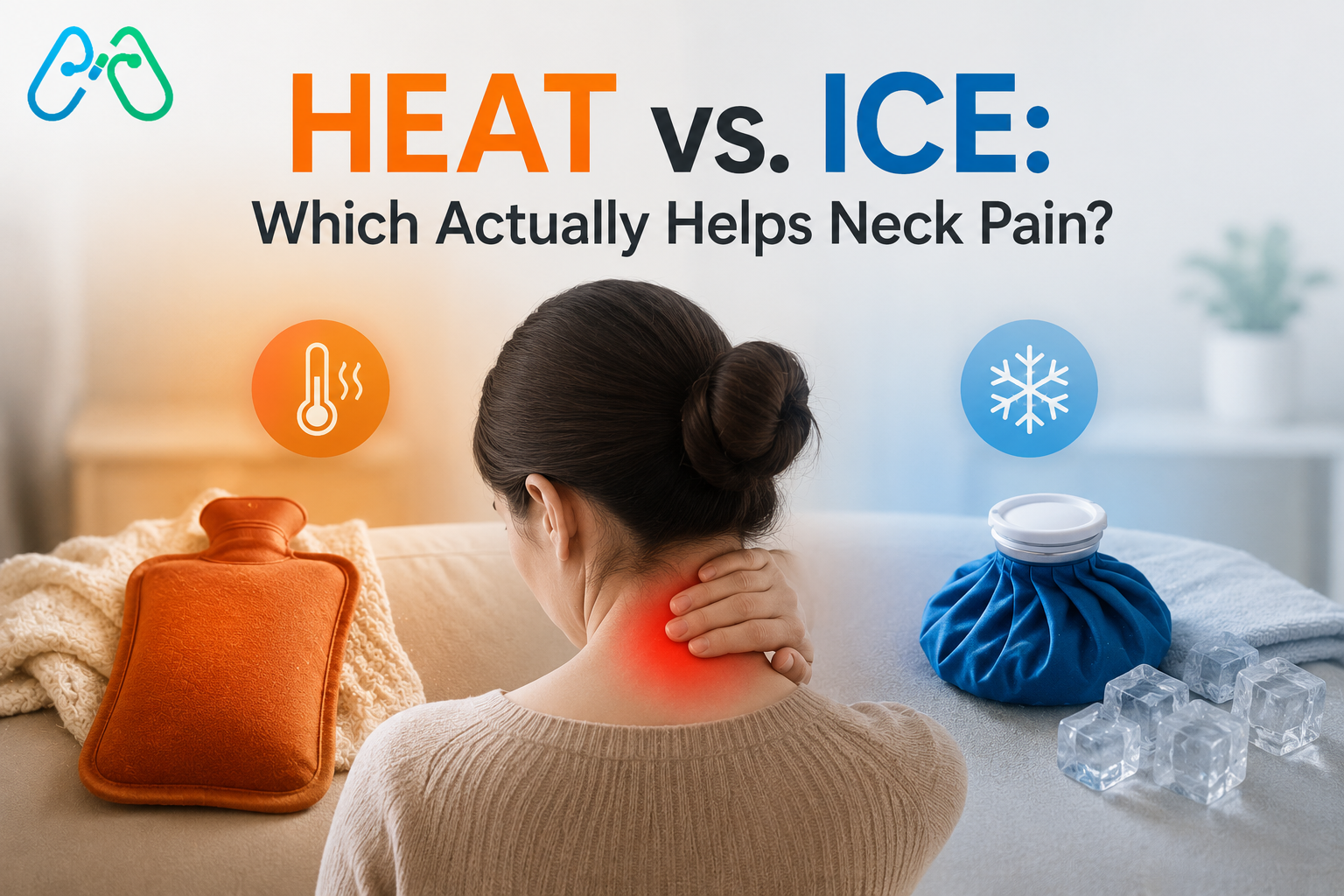
Both work — just for different problems. Ice reduces inflammation and numbs acute pain right after an injury. Heat relaxes tight muscles and improves blood flow for chronic stiffness. The mistake most people make is reaching for warmth when they should be reaching for cold. At MedizinHub, we break down exactly when to use each — and why getting it wrong can slow your recovery.

Heat therapy
For tension & stiffness
Relaxes muscle spasms, boosts circulation, and eases chronic aches from posture or stress.

Ice therapy
For new injuries & flare-ups
Constricts blood vessels, limits swelling, and numbs sharp pain from a recent strain or sprain.

How heat helps your neck
Heat works by dilating blood vessels, flooding the area with fresh oxygen and nutrients while flushing out waste products that cause soreness. It also directly reduces muscle spindle activity — the tension reflex that keeps your muscles locked up tight.
A heating pad, warm shower, or heat wrap held against your neck for 15–20 minutes is often all it takes to feel meaningful relief from postural tension or stress-related stiffness.
- Use heat when: your pain has been building for days, your neck feels "locked," or you wake up stiff in the morning.
- Avoid heat when: the area is swollen, visibly red, or warm to the touch — signs of active inflammation.
- Duration: 15–20 minutes at a moderate temperature. Never fall asleep with a heating pad.

How ice helps your neck
Cold therapy (cryotherapy) works by narrowing blood vessels, which limits the inflammatory response. When you strain a muscle or ligament, the body floods the area with inflammatory chemicals — helpful for healing, but painful in excess. Ice puts a brake on that process.
Ice is most effective in the first 24–72 hours after an injury. After that window closes, switching to heat is usually more beneficial.
- Use ice when: you hurt your neck recently (within 72 hours), the area is swollen, or pain came on suddenly after a specific movement.
- Avoid ice when: your pain is chronic and dull — cold can increase muscle tightness and make stiffness worse.
- Duration: 10–15 minutes with a cloth barrier between ice and skin. Never apply ice directly.
Timeline: what to use and when
0 – 72 hours
Use ice. Limit inflammation and numb acute pain. Apply 10–15 minutes every 2 hours while awake.
Day 3 – 7
Transition to alternating hot and cold. Start with ice if still swollen, end with heat to ease muscle tension.
Day 7 onward
Switch to heat. Focus on relaxing muscles and restoring range of motion. Pair with gentle stretching.
Chronic pain (weeks+)
Heat is your go-to. Use before activity to loosen up, and see a physiotherapist if pain persists beyond 3 weeks.
Pair therapy with stretching
Heat therapy works best when followed by gentle movement. Once your muscles are warm and relaxed, a few minutes of chin tucks, side tilts, and shoulder rolls can help restore mobility and prevent stiffness from returning.
Ice is best applied after activity or stretching — not before — to reduce any residual soreness without stiffening up your muscles beforehand.
⚠ When to skip both
Neither heat nor ice is appropriate if your neck pain comes with numbness, tingling down the arm, severe headache, dizziness, or pain following a fall or car accident. These are signs to see a doctor — not reach for a heat pack.
Still not sure which to use?
Speak to a physiotherapist or your GP to get personalised advice for your neck pain. More guides like this at MedizinHub.
Book a consultationAbout the Author
MedizinHub Team
Posted in June 11, 2026