Dengue Vaccine in India (2026): Is Qdenga Approved, Who Can Take It, and Is It Safe?
Last updated: 23 October 2026. This article is for general information and is not medical advice. Please consult a doctor before vaccination.
Quick Answer
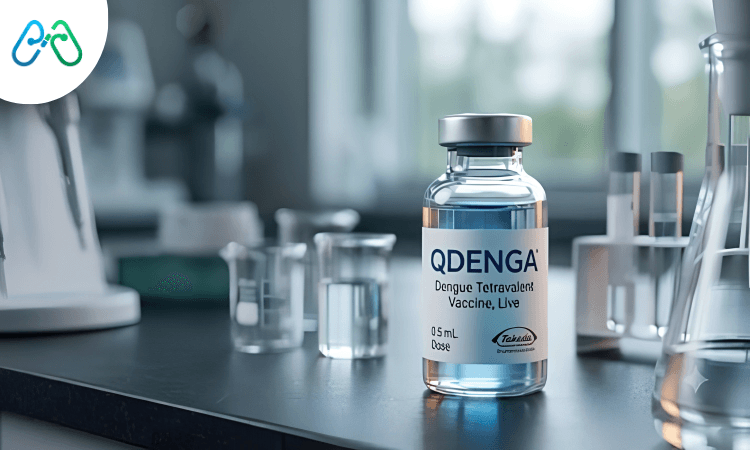
Yes. India approved its first dengue vaccine, Takeda's Qdenga (TAK-003), on 20 July 2026. It is approved for people aged 4 to 60 years, can be given whether or not you have had dengue before, and does not require a pre-vaccination blood test. It is a two-dose vaccine. A price has not been announced, and a private-market launch is expected in 2027.
Key Facts at a Glance
|
Item |
Detail |
|---|---|
|
Vaccine name |
Qdenga (TAK-003), made by Takeda |
|
Type |
Live-attenuated, tetravalent (covers all four dengue serotypes) |
|
Approved in India |
20 July 2026 (CDSCO / DCGI) |
|
Approved age group |
4 to 60 years |
|
Doses |
2 doses, 3 months apart |
|
Pre-vaccination test needed? |
No |
|
Efficacy in the pivotal trial |
About 80% against confirmed dengue, 12 months after the second dose |
|
Price |
Not announced yet |
|
Expected availability |
Private market, 2027 |
Is the Dengue Vaccine Approved in India?
Yes. India's drug regulator has cleared Qdenga, making it the first dengue vaccine authorised in the country. The approval followed a review of the vaccine's quality, safety and efficacy.
Key points about the approval:
- Regulator: The Central Drugs Standard Control Organisation (CDSCO), under the Drug Controller General of India (DCGI).
- Evidence reviewed: Takeda's global programme of 19 Phase I, II and III trials involving more than 28,000 participants, plus a Phase III study conducted in India.
- Manufacturing: Takeda partnered with Hyderabad-based Biological E in 2024 to expand production.
- Distribution: Takeda has reportedly partnered with Dr Reddy's Laboratories for India's private market.
- Global status: The vaccine is approved in more than 40 countries and is prequalified by the World Health Organization.
Why Does India Need a Dengue Vaccine?
India carries nearly one-third of the world's dengue burden. Reported cases have risen about eleven-fold over two decades, driven by urbanisation, climate change, changing mosquito habitats and population growth. Official data show more than one million cases and at least 1,500 deaths since 2021.
India is also a difficult setting for dengue. All four serotypes (DENV-1 to DENV-4) circulate across the country, and an ICMR surveillance study found that roughly 1 in 14 patients had more than one serotype at the same time. A vaccine that covers all four is therefore especially relevant.
Who Can Take the Dengue Vaccine in India?
- Age 4 to 60 years. This is the approved range. Children under 4 and adults over 60 are outside the approved indication.
- People with or without past dengue. You do not need to have had dengue, and you do not need a test to prove prior infection.
- People without contraindications. Your doctor will check your health history before vaccination.
Who should talk to a doctor first?
International prescribing information for Qdenga advises caution or avoidance for certain groups. Please confirm against the final Indian label once it is published.
- Pregnant or breastfeeding women
- People with weakened immune systems (for example, from HIV, chemotherapy or immunosuppressive drugs)
- Anyone who has had a severe allergic reaction to a previous dose or to any vaccine component
- Anyone with a current fever or acute illness (vaccination is usually postponed)
How Many Doses Do You Need?
Qdenga is given as two doses, three months apart. The vaccine is approved for dengue prevention, so a full course is needed for the protection seen in clinical trials. Your doctor will advise on timing.
Is the Dengue Vaccine Safe?
Safety is the most common concern, partly because of the history of an earlier dengue vaccine.
How Qdenga differs from Dengvaxia
Sanofi's Dengvaxia is not approved in India. It is recommended only for people with confirmed prior dengue infection, because of a risk of more severe dengue in those who had never been infected. Qdenga was approved for use regardless of prior exposure, which is a key difference from Dengvaxia.
What the evidence shows
- It is described by its maker as the most extensively studied dengue vaccine, with data from the large TIDES efficacy trial, the largest and longest efficacy trial conducted for a dengue vaccine.
- Long-term follow-up of up to seven years has been reported, showing continued protection against dengue and dengue-related hospitalisation.
- Millions of doses have been distributed worldwide since the 2022 international launch, which provides real-world safety data.
- Some Indian specialists note that regulators may have asked for additional post-marketing safety data, so safety monitoring will continue after launch.
Possible side effects
Based on international product information, common reactions are generally mild and short-lived. They include:
- Pain, redness or swelling at the injection site
- Headache
- Muscle pain or tiredness
- Mild fever
Seek medical care promptly for signs of a severe allergic reaction, such as difficulty breathing, swelling of the face or throat, or a widespread rash. Because Qdenga is a live vaccine, tell your doctor about your health conditions before vaccination.
How Effective Is Qdenga?
- Overall protection: In a late-stage trial, the vaccine showed about 80.2% efficacy against confirmed dengue one year after the second dose.
- Hospitalisation: Longer-term data indicate protection against dengue-related hospitalisation, which matters most for preventing severe illness.
- All four serotypes: The vaccine is designed to cover all four, though trial evidence of protection is stronger for some serotypes than others, particularly in people who have never had dengue.
- Not 100%: A vaccinated person can still get dengue. Mosquito control and early medical care remain essential.
Takeda has not yet shared population-level outbreak impact data for India, so how much the vaccine will reduce transmission at scale is still to be seen.
When Will It Be Available, and What Will It Cost?
As of the latest reports reviewed for this article:
- Availability: Not immediate. A private-market launch is expected in 2027.
- Price: Not announced.
- Government programme: No announcement has been made about including it in India's public immunisation programme. Approval could pave the way for wider public use in future.
Check with your doctor or hospital, or Takeda India's official channels, for current availability and pricing.
Qdenga vs Dengvaxia vs Upcoming Indian Vaccines
|
|
Qdenga (Takeda) |
Dengvaxia (Sanofi) |
DengiAll (Panacea Biotec) |
|---|---|---|---|
|
Status in India |
Approved (July 2026) |
Not approved |
In Phase III trials |
|
Prior infection required? |
No |
Yes, recommended only for those previously infected |
To be determined |
|
Doses |
2 |
3 |
Single dose (candidate) |
|
Pre-vaccination test |
Not needed |
Needed |
To be determined |
Indian developers are also working on candidates. Panacea Biotec's DengiAll is in final-stage trials with ICMR, and Indian Immunologicals Ltd is preparing for mid-stage trials of its own candidate.
Dengue Prevention Checklist: A Vaccine Is Not Enough
- Remove stagnant water from coolers, pots, tyres and containers every week.
- Use mosquito repellents and wear full-sleeved clothing, especially in the morning and evening when Aedes mosquitoes bite.
- Fit window screens and use bed nets.
- Keep water storage containers covered.
- Seek medical care early for high fever with severe body ache, headache, pain behind the eyes or rash.
- Watch for warning signs such as persistent vomiting, severe abdominal pain, bleeding or extreme weakness, and go to hospital immediately.
Frequently Asked Questions
Is the dengue vaccine available in India now? It is approved, but not yet on sale. A private-market launch is expected in 2027.
Can children take the dengue vaccine? Children aged 4 and above are included in the approved age range. Younger children are not.
Do I need a blood test before the vaccine? No. Qdenga can be given without testing for past dengue infection.
Can I take it if I have already had dengue? Yes. Qdenga is approved regardless of previous dengue exposure.
Will the vaccine be free under government programmes? No announcement has been made yet. Initial availability is expected through the private market.
Does the vaccine give 100% protection? No. Trial efficacy was around 80% against confirmed dengue, so mosquito protection is still important.
How many doses are needed? Two doses, three months apart.
Bottom Line
Qdenga's approval is an important step in India's fight against dengue. It offers a two-dose option for people aged 4 to 60, with or without past infection, and without pre-screening. It is not a replacement for mosquito control, and details such as price, launch date and the final Indian prescribing information are still awaited. Speak to your doctor about whether vaccination is right for you.
About the Author
MedizinHub Team
Posted in October 23, 2026
