Can Diwali Firecrackers Damage Children’s Hearing?|Diwali and Hearing Health
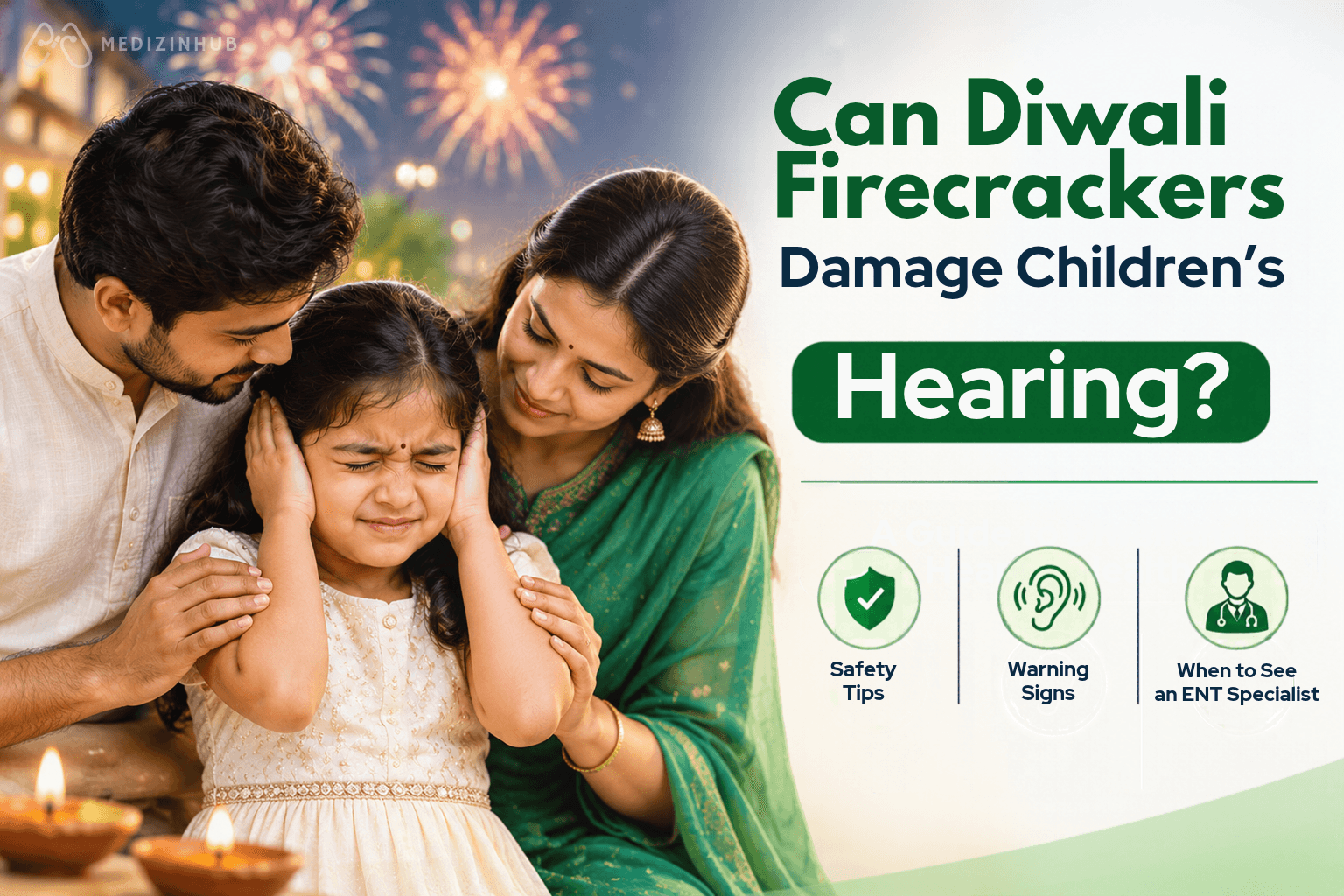
Diwali is a festival of lights, celebration and family gatherings. However, the loud sounds of firecrackers can pose a hidden risk to children’s hearing. A sudden explosion near the ear or repeated exposure to loud firecracker noise may damage the sensitive structures inside the ear, potentially leading to temporary or permanent hearing loss.
Parents can help protect their children by understanding the risks, recognising early warning signs and following simple hearing-safety precautions during Diwali.
Can Diwali Firecrackers Damage Children’s Hearing?
Yes. Loud firecrackers can damage children’s hearing, particularly when they explode close to the ears. A single intense sound may cause immediate injury, while repeated exposure to loud noise can also contribute to noise-induced hearing loss.
Children may experience ringing in the ears, muffled hearing, ear pain or difficulty hearing after exposure. Some symptoms may improve, but others can indicate lasting damage. Sudden hearing loss after a loud explosion requires urgent medical assessment.
The safest approach is to keep children away from firecracker explosions, minimise exposure to loud noise and seek medical advice if hearing-related symptoms develop.
Why Is Diwali Noise a Concern for Children’s Ears?
During Diwali, firecrackers are commonly burst in streets, residential areas and open spaces. The sound of some crackers can be extremely intense, especially when they explode nearby.
According to the US National Institute on Deafness and Other Communication Disorders (NIDCD), fireworks can produce sound levels of approximately 140–160 decibels under certain conditions. The actual level reaching a child’s ear depends on the type of firecracker, distance and surroundings. Very loud impulse sounds can cause hearing damage in a single exposure. Source: NIDCD
Children may not recognise when a sound is dangerous or know how to move away from it. Younger children may also find it difficult to explain symptoms such as muffled hearing or ringing in the ears.
This makes parental supervision and prevention particularly important during festival celebrations.
How Do Loud Firecrackers Damage Hearing?
To understand the risk, it helps to know how hearing works.
The ear receives sound waves and converts them into signals that the brain interprets as sound. Inside the inner ear, tiny sensory hair cells play an important role in this process.
Extremely loud sounds can damage these delicate structures. Once damaged, these sensory hair cells do not regenerate in humans, which means some noise-related hearing loss may be permanent.
Firecracker noise may affect hearing in several ways:
1. Temporary Hearing Loss
After exposure to a loud explosion, a child may temporarily hear sounds less clearly. Voices may seem muffled, or the child may feel that one or both ears are blocked.
Although hearing can sometimes recover, temporary improvement does not guarantee that the ear has escaped injury.
2. Permanent Hearing Loss
A very intense explosion close to the ear can cause immediate and lasting hearing damage. The risk depends on the sound intensity, distance and individual circumstances.
3. Tinnitus: Ringing in the Ears
Tinnitus refers to hearing ringing, buzzing or similar sounds without an external source. It may occur after exposure to loud noise and can sometimes persist.
4. Eardrum Injury
A nearby blast can injure the eardrum or other structures of the ear. Symptoms may include sudden pain, hearing loss, bleeding or fluid coming from the ear.
These symptoms should not be ignored. Source: NIDCD
What Are the Warning Signs of Hearing Damage After Diwali?
Children may not always communicate that their hearing has changed. Parents should watch for the following signs after firecracker exposure.
-
Ringing or buzzing: The child reports unusual sounds inside one or both ears.
-
Muffled hearing: Voices or everyday sounds seem unclear or distant.
-
Ear pain: The child complains of pain, discomfort or a blocked sensation.
-
Difficulty understanding speech: The child repeatedly asks others to speak again.
-
Increased device volume: The child wants the television or other audio devices louder than usual.
-
Reduced response to sounds: The child appears not to hear familiar voices or everyday sounds as expected.
-
Fluid or blood from the ear: This may indicate an ear injury and needs urgent medical attention.
Some symptoms may not be obvious immediately. If you suspect hearing damage, do not wait for every warning sign to appear before seeking medical advice.
Can One Loud Firecracker Cause Hearing Loss?
Yes. One extremely loud firecracker exploding close to a child's ear can cause hearing damage. The risk is greater when the sound is intense and the distance is short.
Repeated exposure also matters. Spending a long time in an area where firecrackers are continuously bursting can increase the overall noise exposure.
There is no single safe distance that guarantees protection from every type of firecracker. Sound levels vary considerably, and the surrounding buildings and environment can affect how sound travels.
The most reliable precaution is to avoid close exposure to firecracker explosions rather than relying only on distance or the absence of pain.
How Can Parents Protect Children’s Hearing During Diwali?
Families can enjoy Diwali while taking practical steps to reduce noise-related risks.
1. Keep Children Away From Loud Firecrackers
Avoid allowing children to stand close to crackers when they are being lit or exploding. Do not let children hold firecrackers near their ears or handle explosive devices without appropriate adult supervision.
Choosing quieter celebrations can reduce exposure significantly.
2. Watch Fireworks From a Safe Distance
If attending a fireworks display, follow the organiser’s safety instructions and stay well away from the launch area. A greater distance generally reduces sound exposure, although it does not guarantee that the sound is harmless.
Avoid standing near locations where powerful firecrackers are being burst repeatedly.
3. Use Suitable Hearing Protection When Necessary
Properly fitted hearing protectors, such as earmuffs designed to reduce hazardous noise, can help lower exposure. For young children, parents should select age-appropriate protection and ensure it fits correctly.
Hearing protection should not be treated as permission to stand close to firecrackers. Moving away from the noise remains essential.
4. Keep Babies and Young Children in a Quieter Indoor Space
Babies and young children may be especially vulnerable because they cannot reliably identify dangerous noise or communicate discomfort.
During periods of intense firecracker activity, keep them indoors, away from windows and exterior doors where possible. Close windows to help reduce noise, while maintaining appropriate ventilation and indoor safety.
5. Avoid Putting Objects Into the Ears
Do not insert cotton buds, fingers, oil or other substances into a child’s ears to prevent or treat noise-related injury.
Ordinary cotton balls are not reliable hearing protection against powerful explosions. Use appropriate hearing protectors instead.
6. Give Children Quiet Breaks
Reduce the time children spend in noisy environments. Encourage them to take breaks in quieter places and avoid combining firecracker exposure with loud music or headphones.
Reducing both the intensity and duration of noise exposure helps protect hearing.
What Should You Do If Your Child Experiences Ringing in the Ears After Diwali?
If your child reports ringing, buzzing, muffled hearing or ear discomfort after exposure to firecrackers, move them to a quiet environment and avoid further loud noise.
Pay attention to the symptoms and seek medical advice, particularly if they persist or recur.
Seek urgent medical assessment if your child develops sudden hearing loss, even if there is no pain. Sudden hearing loss can be time-sensitive and should not be left until the next day.
Other symptoms that require urgent assessment include:
-
Severe ear pain after an explosion.
-
Blood or fluid coming from the ear.
-
Dizziness or significant balance problems.
-
Sudden changes in hearing in one or both ears.
Do not attempt to treat a suspected ear injury at home. A doctor may examine the ear and recommend a hearing assessment or referral to an ENT specialist, depending on the symptoms.
Does Temporary Hearing Loss After Firecrackers Mean Permanent Damage?
Not necessarily. Some people experience temporary hearing changes after loud noise, and their hearing may improve over time.
However, improvement does not always rule out underlying injury. The NIDCD notes that temporary noise-related hearing loss may sometimes be associated with residual long-term damage.
Parents should not assume that a child’s hearing is normal simply because the ringing has stopped. If symptoms occur after a loud explosion, professional advice is appropriate. Sudden or significant hearing loss needs urgent evaluation.
Why Is Hearing Health Important for Children?
Hearing plays an essential role in children's speech development, learning, communication and social interaction.
When hearing is affected, a child may have difficulty understanding instructions, following conversations in a classroom or recognising important sounds in the environment.
Noise-related hearing damage may not always be immediately noticeable. Protecting children’s ears early can help reduce avoidable risks to their long-term hearing health.
Frequently Asked Questions
1. Are Diwali firecrackers harmful to children’s ears?
Yes. Loud firecrackers can cause temporary or permanent hearing damage, particularly when they explode close to the ears. Reducing exposure and keeping children away from loud explosions are important precautions.
2. Can a child lose hearing after one firecracker blast?
Yes. A single, extremely loud blast close to the ear can cause immediate hearing damage. The severity depends on factors such as sound intensity and distance.
3. Is ringing in the ears after Diwali normal?
Ringing may occur after exposure to loud noise, but it should not be dismissed as harmless. If it persists, recurs or occurs alongside hearing changes, seek medical advice. Sudden hearing loss requires urgent assessment.
4. Can cotton balls protect children’s ears from firecrackers?
Cotton balls do not provide reliable protection against very loud firecracker noise. Properly fitted hearing protectors may reduce exposure, but children should also remain well away from the source of the noise.
5. Should I take my child to an ENT doctor after loud firecracker exposure?
Seek urgent medical assessment if your child experiences sudden hearing loss, severe pain, bleeding, fluid discharge or significant dizziness. Persistent ringing, muffled hearing or other changes should also be evaluated by a healthcare professional.
6. How can I celebrate Diwali without putting my child’s hearing at risk?
Choose quieter celebrations, keep children away from firecracker explosions, watch displays from a safe distance and use suitable hearing protection when necessary. Avoid prolonged exposure to loud noise and seek medical advice if symptoms develop.
Conclusion:
Diwali celebrations should create happy memories, not avoidable health concerns. Loud firecrackers can damage the delicate structures inside the ear, and the effects may be temporary or permanent.
Parents can reduce the risk by choosing quieter celebrations, keeping children away from explosions, using appropriate hearing protection when needed and recognising warning signs early.
If your child experiences sudden hearing loss, ear injury or persistent hearing-related symptoms after Diwali, consult a healthcare professional promptly.
Celebrate responsibly. Protect your child’s hearing today for a healthier tomorrow.
Medical disclaimer: This article is for general health education and does not replace professional medical advice, diagnosis or treatment. Consult a qualified healthcare professional if your child develops hearing-related symptoms.
About MedizinHub: MedizinHub supports families with access to healthcare services and medical guidance. If you have concerns about your child’s hearing, seek advice from a qualified doctor or ENT specialist.
About the Author
MedizinHub Team
Posted in October 27, 2026
