9 Healthy Foods to Stock Up on for Navratri Fasting
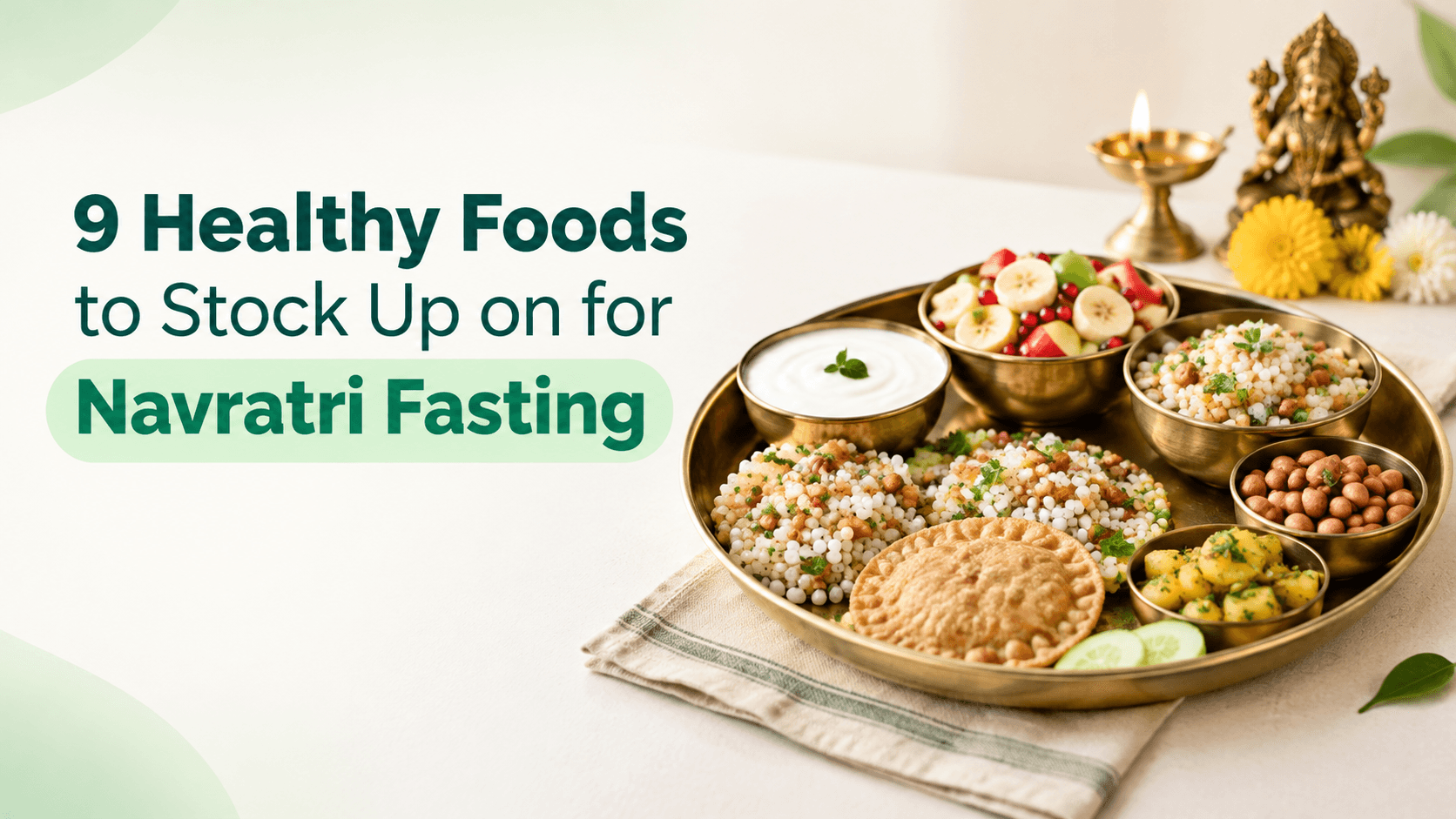
Navratri is a nine-day festival celebrated with devotion, prayer, and traditional fasting across India. During this period, many people follow specific dietary rules, avoiding foods such as regular grains, pulses, onions, and garlic while choosing ingredients permitted by their family and regional traditions.
The nine healthy foods to keep in your kitchen during Navratri fasting are buckwheat flour, barnyard millet, amaranth flour, potatoes, fresh fruits, dairy products, nuts and seeds, rock salt, and cooking fats such as ghee and vegetable oils. These ingredients offer variety and can help you prepare nourishing meals throughout the festival.
Planning your meals in advance makes fasting easier and helps you avoid relying entirely on fried snacks, sweets, and other calorie-dense foods. The right food choices can help provide energy, protein, fibre, vitamins, and minerals while respecting your fasting traditions.
What Should You Eat During Navratri Fasting?
Common foods used during Navratri fasting include:
-
Buckwheat flour (kuttu atta): For rotis, pancakes, and other fasting dishes.
-
Barnyard millet (samak rice): For khichdi, porridge, and pulao-style meals.
-
Amaranth flour (rajgira atta): For rotis, pancakes, and traditional recipes.
-
Potatoes: For boiled, roasted, or lightly cooked dishes.
-
Fresh fruits: For fibre, vitamins, minerals, and hydration.
-
Dairy products: Milk, plain yoghurt, and paneer for protein and calcium.
-
Nuts and seeds: For healthy fats, protein, and minerals.
-
Rock salt (sendha namak): A traditional seasoning used in fasting recipes.
-
Ghee and cooking oils: For preparing meals in appropriate quantities.
The foods permitted during fasting vary by household, region, and religious practice. Choose ingredients according to your fasting rules and individual health requirements.
Why Do People Fast During Navratri?
Navratri fasting has religious, cultural, and spiritual significance. Many devotees observe a fast to express devotion to Goddess Durga, practise self-discipline, and dedicate more time to prayer and reflection.
Fasting practices differ considerably. Some people eat fruits and drink milk, while others include specific flours, millets, potatoes, vegetables, and dairy products. Some follow partial fasting, while others observe stricter dietary restrictions.
However, fasting does not automatically mean eating a balanced diet or detoxifying the body. The quality of food, portion sizes, hydration, and cooking methods all influence nutritional intake. The liver and kidneys already perform essential functions in processing substances and removing waste from the body.
Planning a varied fasting diet can help you meet your nutritional needs while following your traditions.
9 Healthy Foods to Keep in Your Kitchen During Navratri
1. Buckwheat Flour (Kuttu Atta)
Buckwheat flour is a popular ingredient in North Indian fasting recipes. Despite its name, buckwheat is not a type of wheat. It is a gluten-free pseudocereal that can be used to prepare rotis, pancakes, puris, and other traditional dishes.
Buckwheat provides carbohydrates, fibre, plant-based protein, and minerals such as magnesium. It can add variety to meals when conventional wheat flour is avoided.
How to use it: Prepare buckwheat rotis with plain yoghurt or a suitable paneer dish. If making puris, remember that deep-frying increases their fat and calorie content.
2. Barnyard Millet (Samak Rice)
Barnyard millet, commonly called samak rice or vrat ke chawal, is a millet rather than conventional rice. It is widely used as a substitute for rice during fasting.
It supplies carbohydrates for energy and provides fibre and certain minerals. Its nutritional contribution depends on the serving size and how it is prepared.
How to use it: Make samak khichdi, porridge, or a pulao-style dish using fasting-approved ingredients. Pair it with plain yoghurt or another permitted protein source for a more balanced meal.
3. Amaranth Flour (Rajgira Atta)
Amaranth is another useful ingredient for fasting meals. Its flour can be used to make rotis, pancakes, parathas, and traditional sweets, depending on your dietary restrictions.
Amaranth contains carbohydrates, plant-based protein, and minerals, including magnesium and iron. It also provides an alternative to buckwheat flour, helping you avoid repetitive meals.
How to use it: Prepare amaranth rotis and serve them with plain yoghurt or a permitted paneer preparation. Nuts and seeds can provide additional protein and healthy fats.
4. Potatoes
Potatoes are versatile ingredients commonly included in Navratri fasting diets. They provide carbohydrates, potassium, and vitamin C, although the amount of vitamin C retained depends on cooking and storage.
Their nutritional value is influenced by preparation. Boiled, steamed, or roasted potatoes generally require less added fat than deep-fried potato chips, puris, and patties.
How to use them: Prepare boiled potatoes, lightly seasoned potato curry, or roasted potato dishes. Use moderate quantities of oil or ghee and combine potatoes with other permitted foods rather than relying on them for every meal.
5. Fresh Fruits
Apples, bananas, oranges, papayas, pears, and other seasonal fruits are convenient additions to a fasting diet.
Whole fruits provide fibre, vitamins, minerals, and water. They can also offer a convenient source of energy between meals. Unlike fruit juice, whole fruit retains its natural fibre and generally helps you feel fuller.
How to use them: Prepare a fresh fruit bowl, add chopped fruit to plain yoghurt, or eat a banana as a snack. Choose a variety of fruits instead of depending on a single option throughout the festival.
6. Dairy Products
Milk, plain yoghurt, and paneer can help improve the protein and calcium content of Navratri meals when they are permitted by your fasting tradition.
Milk can be added to porridge, yoghurt pairs well with samak rice, and paneer can be included in suitable curries or other dishes. Unsweetened dairy products are useful when you want to avoid unnecessary added sugar.
People with lactose intolerance can consider lactose-free dairy options if appropriate for their dietary restrictions. Those who avoid dairy entirely should consider other permitted sources of protein and calcium.
How to use them: Combine plain yoghurt with millet dishes, include paneer in a meal, or drink milk without excessive added sugar.
7. Nuts and Seeds
Almonds, walnuts, cashews, peanuts, and permitted seeds provide healthy fats, protein, and several essential nutrients. Their nutrient profiles vary: almonds provide vitamin E, while walnuts contain the plant-based omega-3 fatty acid ALA.
Nuts and seeds are energy-dense, so modest portions can add nutritional value without making meals unnecessarily heavy.
How to use them: Add a small portion to fruit bowls, yoghurt, or porridge. Unsalted nuts can also serve as a convenient snack between meals.
8. Rock Salt (Sendha Namak)
Rock salt, commonly known as sendha namak, is traditionally used to season many Navratri fasting recipes.
However, rock salt is not automatically healthier than regular table salt. Both primarily contain sodium chloride, and excessive sodium intake can contribute to high blood pressure.
Another important consideration is iodine. Many varieties of ordinary table salt are fortified with iodine, whereas rock salt is not usually iodised. Iodine is essential for normal thyroid function.
How to use it: If sendha namak is part of your fasting tradition, use it sparingly. Make sure your overall diet provides adequate iodine, particularly if you regularly avoid iodised salt.
9. Ghee and Cooking Oils
Ghee and cooking oils are commonly used to prepare fasting meals. Dietary fats provide energy and help the body absorb fat-soluble vitamins.
Ghee contains a relatively high proportion of saturated fat, so moderation is important. Unsaturated vegetable oils, such as groundnut, mustard, or olive oil, can be useful choices depending on the dish and your dietary preferences.
The overall quality of your diet depends on the ingredients, cooking method, and amount of fat used—not simply on choosing one particular cooking fat.
How to use them: Use measured quantities of ghee or oil for roasting, sautéing, and preparing traditional dishes. Limit frequent deep-frying, especially when meals already contain other energy-dense ingredients.
Practical Tips for Eating Well During Navratri Fasting
A little preparation can make it easier to maintain a varied diet throughout the nine days.
-
Plan meals in advance: Keep fasting-approved ingredients ready so you are less likely to skip meals or depend on fried snacks.
-
Stay hydrated: Drink water regularly unless your healthcare professional has advised you to restrict fluids.
-
Include protein sources: Where permitted, include yoghurt, paneer, milk, nuts, or other suitable protein-rich foods.
-
Choose varied ingredients: Alternate between fruits, millets, fasting-approved flours, dairy products, and vegetables allowed by your tradition.
-
Moderate fried foods and sweets: Enjoy traditional treats in reasonable portions rather than making them the main part of every meal.
-
Pay attention to symptoms: Persistent weakness, dizziness, or unusual fatigue should not be ignored. Reassess your fasting routine and seek medical advice when necessary.
Frequently Asked Questions
1. What are the best foods to eat during Navratri fasting?
Common options include buckwheat flour, barnyard millet, amaranth flour, potatoes, fresh fruits, milk, yoghurt, paneer, nuts, and seeds. The best choices depend on your fasting rules and nutritional needs.
2. Can we eat regular rice during Navratri fasting?
Regular rice is avoided in many Navratri fasting traditions, while barnyard millet, known as samak rice, is commonly used instead. Practices vary, so follow your household or religious guidelines.
3. Are potatoes healthy during Navratri fasting?
Yes. Potatoes provide carbohydrates and potassium and can be part of a balanced fasting diet. Boiling, steaming, and roasting usually require less added fat than deep-frying.
4. How can I maintain energy during Navratri fasting?
Eat varied meals containing permitted carbohydrates, protein sources, and healthy fats. Drink enough water and avoid depending entirely on sweets or fried foods. If you experience persistent dizziness or weakness, seek medical advice.
5. Is sendha namak healthier than regular salt?
Not necessarily. Both contain sodium chloride, and excess sodium can affect blood pressure. Rock salt is not usually iodised, so relying on it exclusively may reduce your iodine intake unless you obtain iodine from other dietary sources.
6. Can people with diabetes fast during Navratri?
People with diabetes should consult their healthcare professional before fasting. Changes in meal timing, carbohydrate intake, and medication can increase the risk of low or high blood glucose. A personalised fasting plan may be necessary.
Conclusion
Navratri fasting can be an opportunity to honour traditions while making thoughtful food choices. Keeping buckwheat flour, barnyard millet, amaranth flour, potatoes, fruits, dairy products, nuts and seeds, rock salt, and suitable cooking fats in your kitchen can make meal preparation easier and more varied.
Focus on balanced portions, appropriate protein sources, hydration, and cooking methods that limit excess added fat. Most importantly, adapt your fasting practices to your individual health needs.
People with diabetes, kidney disease, or other chronic conditions, as well as pregnant or breastfeeding women, should seek appropriate medical advice before undertaking strict or prolonged fasting.
Disclaimer: This article provides general nutritional information and is not a substitute for personalised medical advice.
About the Author
MedizinHub Team
Posted in October 16, 2026