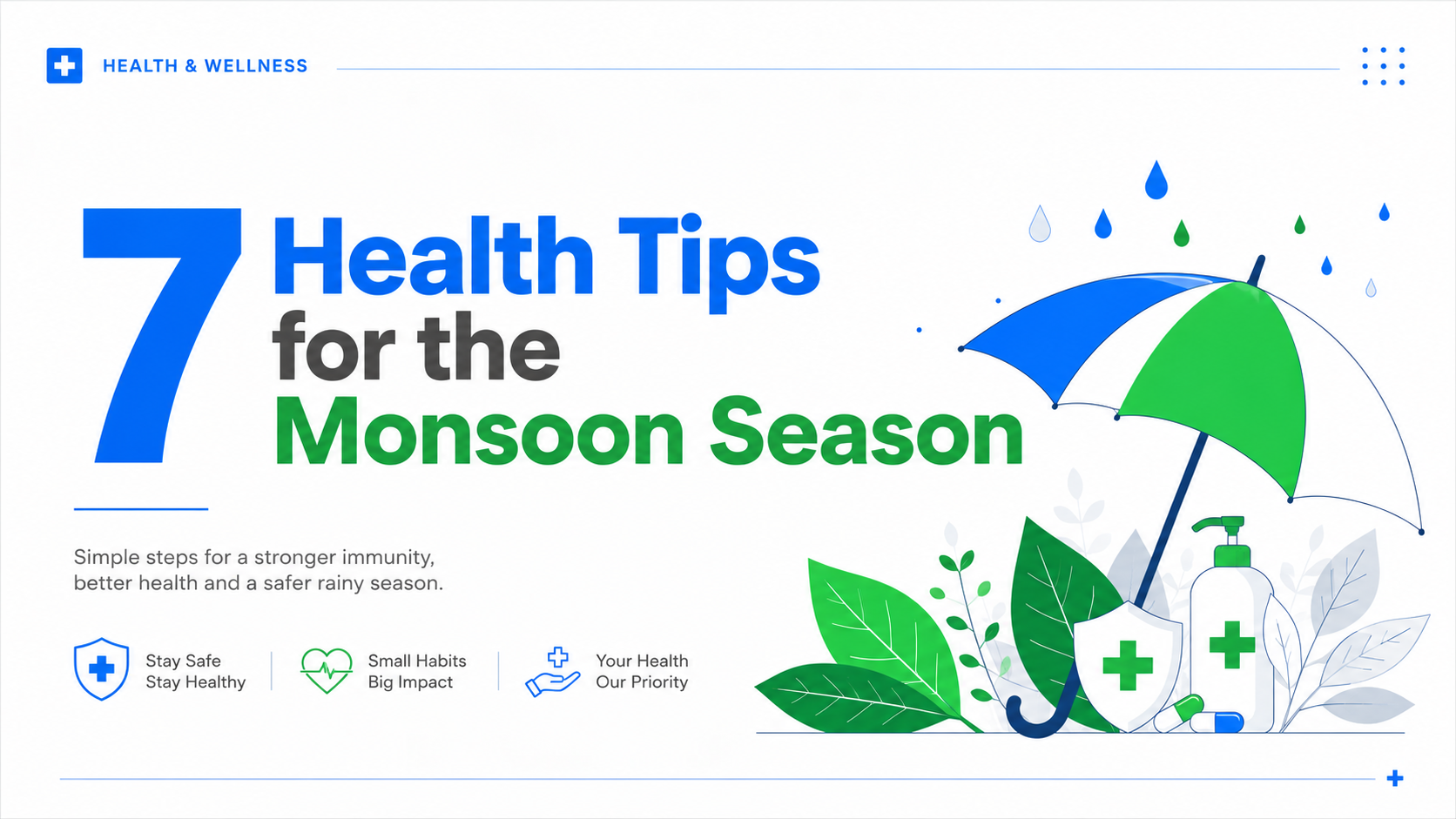
7 Health Tips for the Monsoon Season
Why Does the Monsoon Season Increase Health Risks?
During the rainy season, stagnant rainwater becomes an ideal breeding ground for mosquitoes, increasing the spread of dengue, malaria, and chikungunya. At the same time, high humidity accelerates the growth of bacteria and fungi, causing food to spoil faster and increasing the risk of food poisoning, waterborne diseases, and skin infections.
This combination of contaminated water, poor sanitation, and mosquito breeding makes it essential to adopt preventive measures before illnesses occur.

Essential Monsoon Health Precautions
1. Maintain Personal Hygiene
Good personal hygiene is one of the most effective ways to prevent seasonal infections.
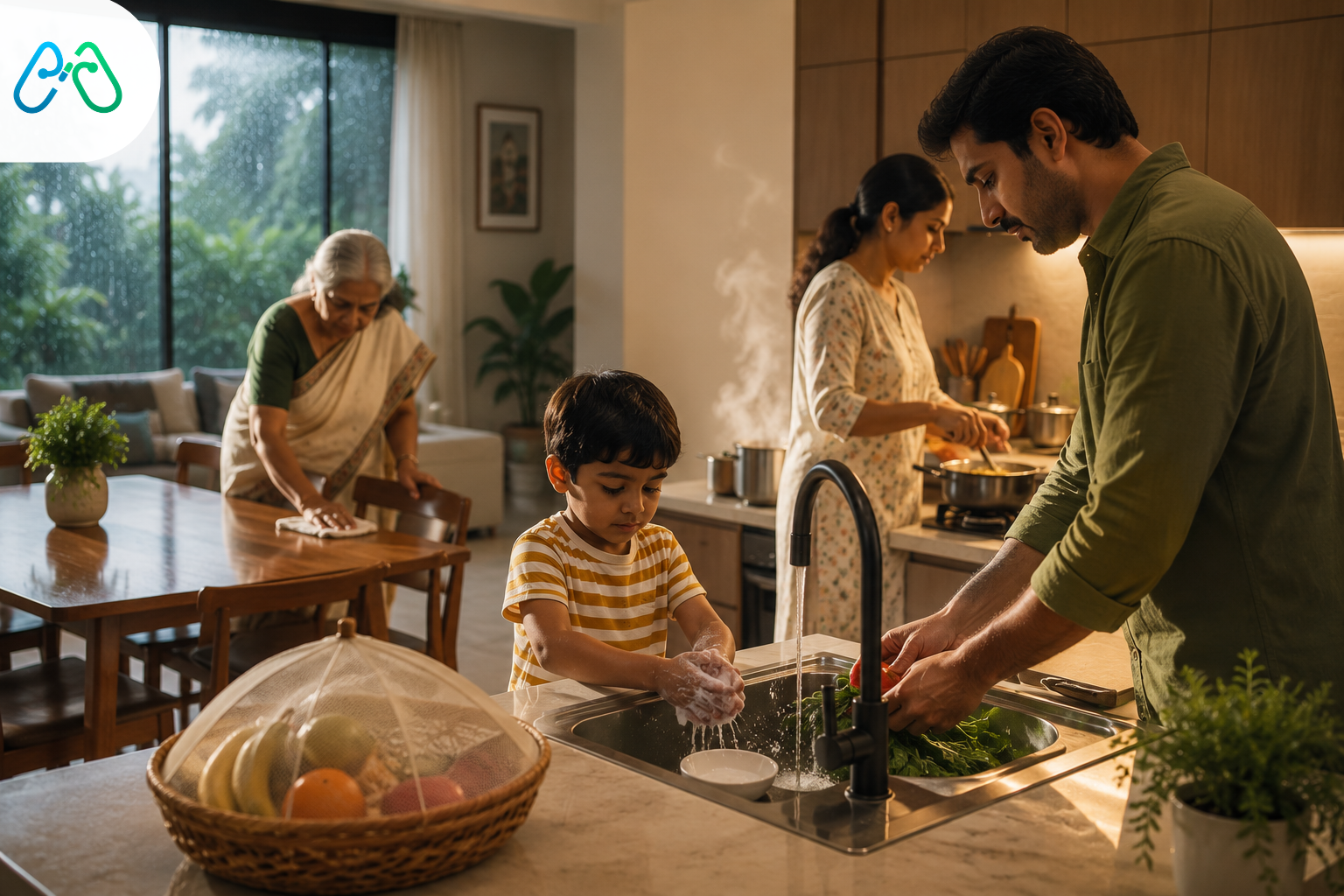
- Wash your hands frequently with soap and clean water, especially before eating, after using the restroom, and after returning home.
- Bathe daily to remove sweat, dirt, and bacteria from your skin.
- Keep your skin dry to prevent fungal infections such as athlete's foot and ringworm.
- Cover your mouth and nose while coughing or sneezing to reduce the spread of viral infections.
If soap and water are not available, carry a hand sanitizer for quick protection while travelling.
2. Practice Food Hygiene
Following proper food hygiene helps reduce the risk of food poisoning and digestive infections.
- Eat freshly cooked meals instead of leftovers.
- Wash fruits and vegetables thoroughly before eating.
- Keep food covered to protect it from flies and dust.
- Avoid raw, undercooked, or street food, especially during heavy rains.
Fresh, home-cooked meals are always the safest option during the monsoon season.
3. Drink Safe Water
Contaminated water is one of the leading causes of typhoid, diarrhoea, and other waterborne diseases.
Always drink filtered water or boiled water, and use clean water for washing fruits and vegetables. Staying hydrated also helps your body function properly and supports a stronger immune system.
4. Keep Your Surroundings Clean
A clean environment reduces the spread of germs and prevents mosquito breeding.
- Remove stagnant water from flower pots, buckets, coolers, tyres, and containers.
- Keep floors, kitchen counters, and bathrooms clean and dry.
- Regularly disinfect frequently touched surfaces such as door handles, switches, tables, and countertops.
For added protection during the monsoon season, consider using Dettol Antiseptic Disinfectant Liquid while mopping floors or cleaning frequently touched surfaces. It helps reduce the bacteria and germs that thrive in humid weather, keeping your home cleaner and safer for your family. You can find it here: https://www.medizinhub.com/product/dettol-antiseptic-disinfectant-liquid
7 Practical Monsoon Health Tips
1. Wash Your Hands Frequently
Regular hand hygiene prevents the spread of harmful bacteria and viruses. Wash your hands for at least 20 seconds with soap and water, especially before meals.
2. Stay Hydrated
Even during rainy weather, your body loses fluids through sweating. Drink plenty of clean drinking water throughout the day to prevent dehydration and support your overall health.
3. Strengthen Your Immunity
A strong immune system helps your body fight seasonal infections more effectively.
Include foods rich in:
- Vitamin C
- Fresh fruits
- Leafy vegetables
- Nuts and seeds
- Probiotics
- Protein-rich foods
A balanced diet plays a major role in preventing viral infections and speeding up recovery.
4. Stay Physically Active
Regular exercise improves blood circulation and strengthens your immune system.
If outdoor activities are not possible because of rain, try:
- Indoor workouts
- Yoga
- Stretching exercises
- Walking indoors
Aim for at least 30 minutes of physical activity most days of the week.
5. Protect Yourself from Mosquitoes
Preventing mosquito bites is one of the most effective ways to avoid dengue, malaria, and chikungunya.
- Wear full-sleeved clothing and full-length pants.
- Use mosquito nets while sleeping.
- Apply mosquito repellents when necessary.
- Eliminate stagnant water around your home every week.
6. Wear Dry Clothes
Avoid wearing wet clothes or damp footwear for long periods.
Moisture encourages the growth of fungi, leading to skin rashes, athlete's foot, and other fungal infections. Choose breathable fabrics and dry your shoes completely before wearing them again.
7. Get Enough Rest
Getting 7–8 hours of quality sleep every night allows your body to repair itself and keeps your immune system functioning properly.
Adequate rest also helps reduce fatigue and improves your body's ability to fight infections.
Common Monsoon Diseases
Watch out for symptoms of these common monsoon diseases:
- Dengue
- Malaria
- Chikungunya
- Typhoid
- Viral Fever
- Diarrhoea
- Food Poisoning
- Fungal Skin Infections
If you experience high fever, persistent vomiting, difficulty breathing, severe weakness, or dehydration, consult a healthcare professional immediately.

The Bottom Line
The monsoon season doesn't have to mean frequent illness. By practising good personal hygiene, drinking safe water, eating freshly cooked food, maintaining a clean environment, and protecting yourself from mosquito bites, you can significantly reduce the risk of seasonal diseases.
Small daily habits make a big difference. Following these monsoon health tips will help you and your family stay healthy, safe, and enjoy the rainy season with confidence.
For convenient healthcare support, MedizinHub offers online doctor consultations, lab tests at home, and medicine delivery, helping you access quality healthcare whenever you need it.
About the Author
MedizinHub Team
Posted in July 17, 2026