5 Healthy Alternatives to Wheat Roti: Nutritious Options You Can Add to Your Diet

For most Indian households, a meal without roti feels incomplete. Wheat roti is filling, familiar and easy to make. But eating the same grain every day can leave gaps in your nutrition, and some people need to avoid or reduce wheat because of gluten sensitivity, blood sugar concerns or weight goals.
The good news: India has a rich tradition of grains and flours that make delicious, nutrient-dense rotis. Here are five healthy alternatives worth adding to your weekly rotation.
1. Ragi (Finger Millet) Roti
Ragi is one of the best plant-based sources of calcium, which makes it a great choice for growing children, older adults and anyone looking after their bone health. It also provides iron and a good amount of dietary fibre.
Why try it:
- Naturally gluten-free
- High in calcium and fibre
- Digests slowly, so it keeps you full for longer
Tip: Ragi dough has no gluten, so it can crack. Knead it with warm water and pat the roti by hand, or mix in a little wheat or rice flour if you are not avoiding gluten.
2. Jowar (Sorghum) Roti
Jowar is light, mild in taste and easy to digest. It is rich in fibre and contains antioxidants, and it is a popular staple in Maharashtra, Karnataka and Telangana.
Why try it:
- Naturally gluten-free
- Good source of fibre, protein and B vitamins
- Gentle on the stomach
Tip: Use hot water to make the dough and press the roti gently on a damp cloth or banana leaf before cooking on a tawa.
3. Bajra (Pearl Millet) Roti
Bajra is a warming grain, traditionally eaten in winter. It is a good source of iron, magnesium and fibre, and it has a lower glycaemic response than refined flours.
Why try it:
- Naturally gluten-free
- Rich in iron and magnesium
- Great with ghee, jaggery or a spicy vegetable curry
Tip: Enjoy it fresh and hot. Bajra rotis turn hard quickly, so make them just before serving.
4. Besan (Chickpea Flour) Roti
Made from ground chickpeas, besan is higher in protein than most flours. Besan rotis, such as the Gujarati-style missi roti, are a useful option if you want more protein in a vegetarian diet.
Why try it:
- High in protein and fibre
- Naturally gluten-free
- Helps you feel full, which can support weight management
Tip: Add chopped onion, coriander, ajwain and green chilli to the dough for extra flavour.
5. Oats Roti
Oats contain beta-glucan, a type of soluble fibre linked to better cholesterol levels and steadier blood sugar. Oats roti is quick to prepare and is an easy way to get more whole grains into breakfast or dinner.
Why try it:
- Heart-friendly soluble fibre
- Quick and easy to make
- Soft texture when mixed with a little wheat flour or mashed vegetables
Tip: Grind rolled oats into a fine flour at home. If you need strictly gluten-free, look for oats labelled gluten-free, as regular oats can be cross-contaminated.
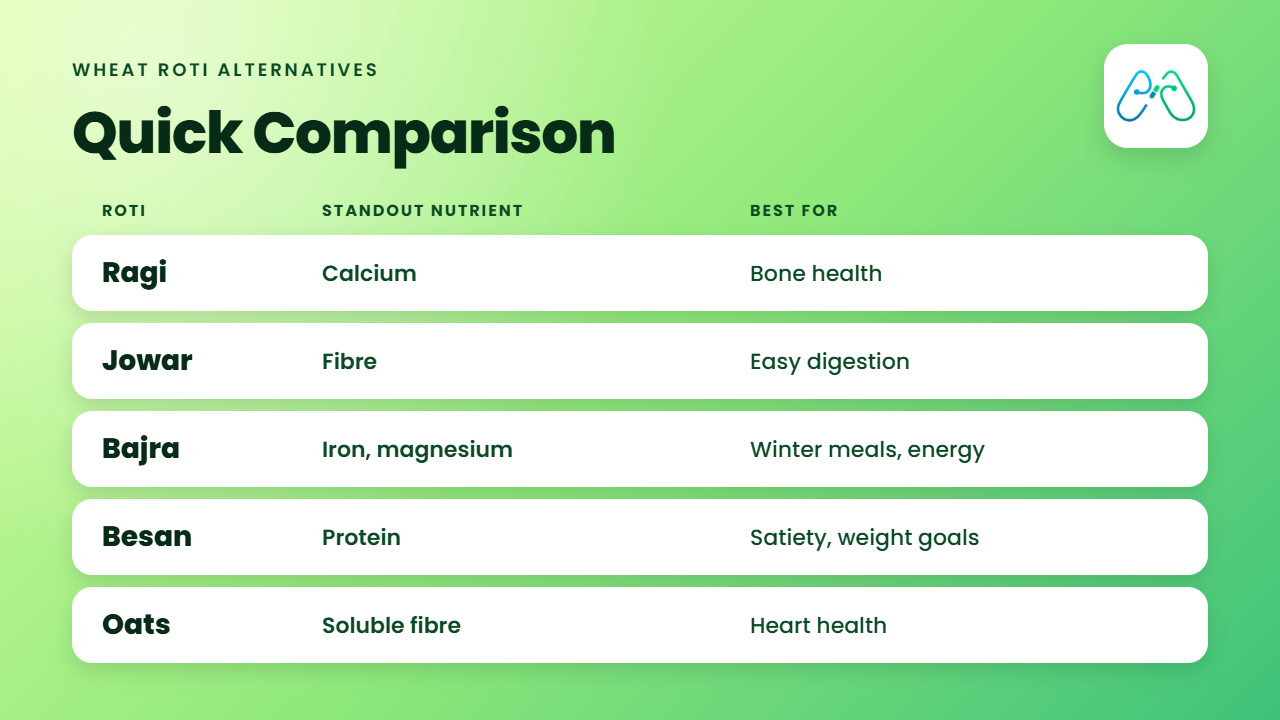
Quick Comparison
|
Roti |
Standout nutrient |
Best for |
|---|---|---|
|
Ragi |
Calcium |
Bone health |
|
Jowar |
Fibre |
Easy digestion |
|
Bajra |
Iron, magnesium |
Winter meals, energy |
|
Besan |
Protein |
Satiety, weight goals |
|
Oats |
Soluble fibre |
Heart health |
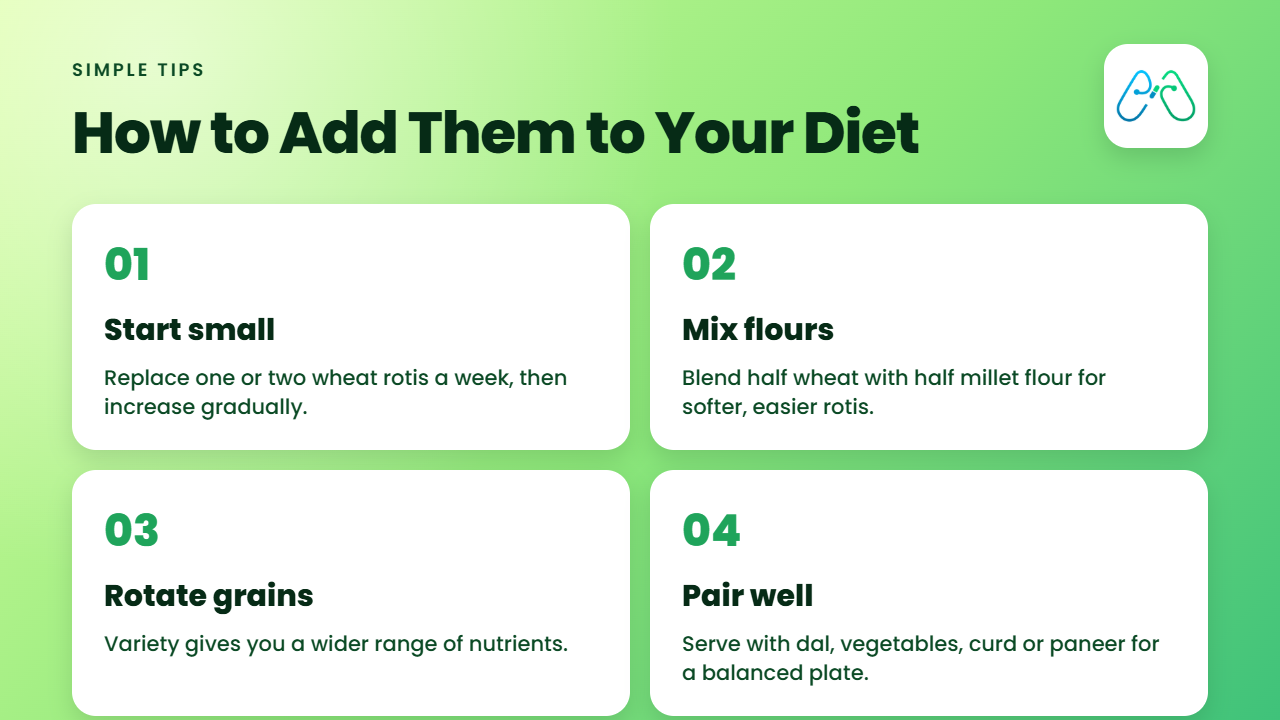
How to Add These to Your Diet
- Start small. Replace one or two wheat rotis a week, then increase gradually.
- Mix flours. Blend half wheat flour with half millet flour for softer, easier-to-roll rotis.
- Rotate grains. Variety gives you a wider range of nutrients.
- Pair well. Serve with dal, vegetables, curd or paneer for a balanced plate.
- Drink water. Higher-fibre foods work best with enough fluids.
Final Thoughts
Wheat roti is not unhealthy, but variety makes a diet stronger. Ragi, jowar, bajra, besan and oats each bring something different to the table, from calcium and iron to protein and fibre. Try one this week and see which becomes your new favourite.
Note: This article is for general information and is not medical advice. If you have diabetes, kidney issues, celiac disease or another health condition, check with your doctor or a registered dietitian before making major changes to your diet.
About the Author
MedizinHub Team
Posted in November 13, 2026
